
Custer County Parole and Probation
Post-release supervision in Custer County has two main tracks. Probation is supervision ordered by a court, often after a jail sentence, a suspended sentence, or a plea. Parole is state supervision after a prison sentence. Both can follow a release, but they are not the same record and they are not checked through the same office.
The local jail closure makes this split more important. A person arrested in Custer County may be booked or held through Fremont County Detention Center, then released to a Custer court case. If the sentence is probation, the public trail runs through Custer Combined Court and the 11th Judicial District probation records contact. If the case became a prison sentence, the person may appear in CDOC offender search with prison, parole, or discharge status.
| Supervision type | Who controls it | Best first check |
|---|---|---|
| Probation | Custer Combined Court and 11th Judicial District Probation | Court docket, then probation records request |
| Parole | Colorado Department of Corrections and State Board of Parole | CDOC offender search and parole-board calendar |
| Discharge | Probation, CDOC, or the court depending on sentence | Final court order, probation closeout, or CDOC status |
- Probation
- Court supervision that may follow or replace time in jail.
- Parole
- State supervision after release from a Colorado prison sentence.
- Discharge
- The end of the supervision term, not just physical release from custody.
- Absconder
- A supervised person alleged to have stopped reporting or left supervision without permission.
Verify Custer County Supervision
A good supervision lookup starts with the legal status shown by the court. VINE can show a custody change. Fremont Intake/Booking can say whether a person is still held. Neither source by itself proves that probation, parole, or discharge has ended. For a named Custer County person, the court case tells whether the release was bond, sentence served, probation, mittimus to CDOC, or another order.
- Search the Colorado Judicial Branch docket using Custer County, Custer Combined Court, date range, and name or case number when available.
- If the docket shows probation, contact 11th Judicial District probation records for active, revoked, modified, or discharged supervision status.
- If the docket or mittimus shows a DOC sentence, use CDOC offender search by DOC number or name and compare identifiers before relying on a match.
- For parole hearings, check the CDOC parole-board calendar, then verify outcome through CDOC status or records.
- If online tools conflict, request the court file or agency record instead of treating a custody result as the final legal answer.
A release from Fremont County Detention Center is a physical custody event. Supervision status must be confirmed through court, probation, or CDOC records.
Custer County Probation Records
Custer County probation is part of Colorado's 11th Judicial District structure. The public Custer probation page gives a direct phone number and records email. That matters because a sheriff release record may say the person left jail, while the probation record explains whether the person must report, whether a condition changed, or whether the court later discharged the term.
The Custer County Probation page is the matched source for this supervision channel.
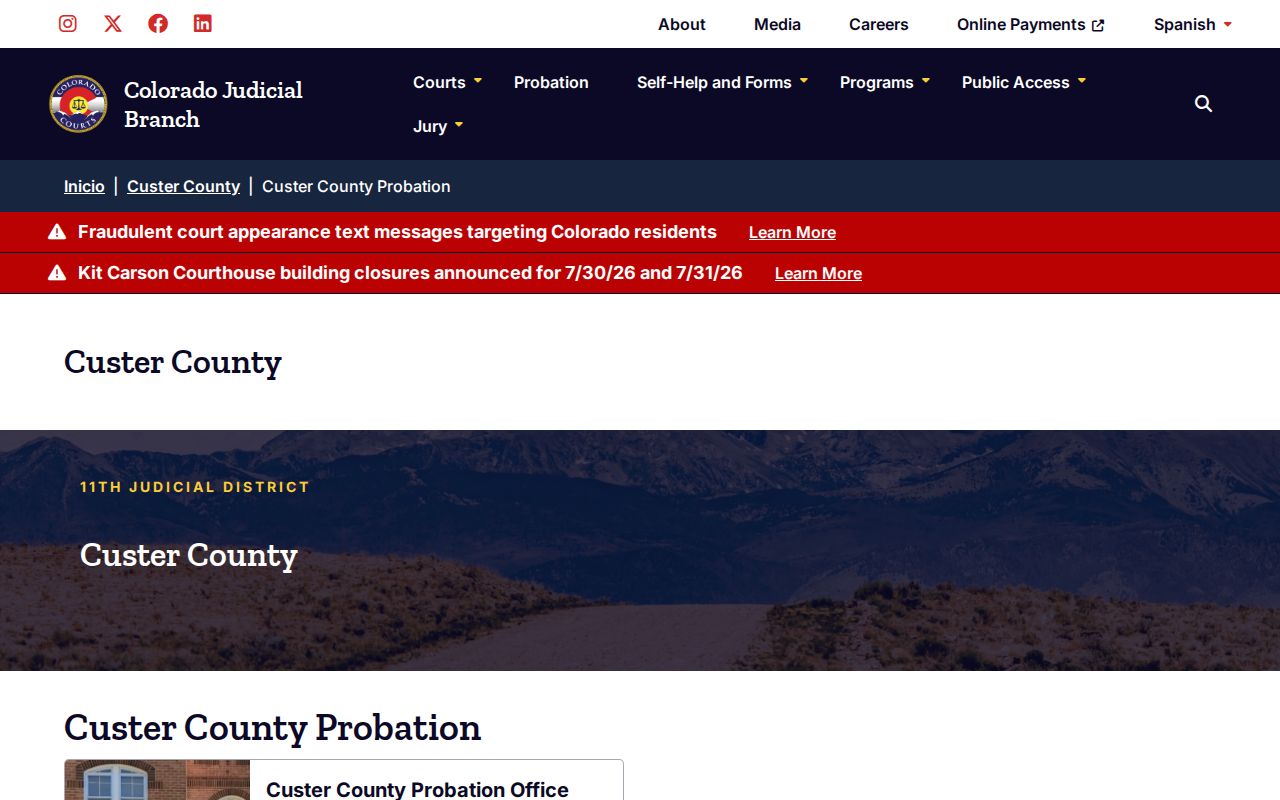
Use that source after the Custer Combined Court docket shows probation or a probation-related filing. Ask for the narrow supervision fact needed, such as active status, revoked status, transfer, or discharge, and include the person's name, case number, and date range when known.
11th Judicial District Probation, Custer CountyPhone: 719-269-0155
Records email: 11ProbationRecordsRequest@judicial.state.co.us
Custer County Parole Checks
Parole applies when a Custer County case becomes a Colorado prison sentence. A local bond release or short jail sentence does not create parole by itself. For a state-prison case, CDOC offender search is the person-level record, while the parole-board calendar is a hearing schedule. A hearing date is not the same thing as release, denial, revocation, or discharge.
The CDOC parole-board calendar shows monthly calendars and states that hearings are open to public attendance by advance arrangement. It also says DOC changes become available the following business day. For application or rescission hearings, the source points users to the offender's case manager; for revocation hearings, it points to the jail where the offender is located.
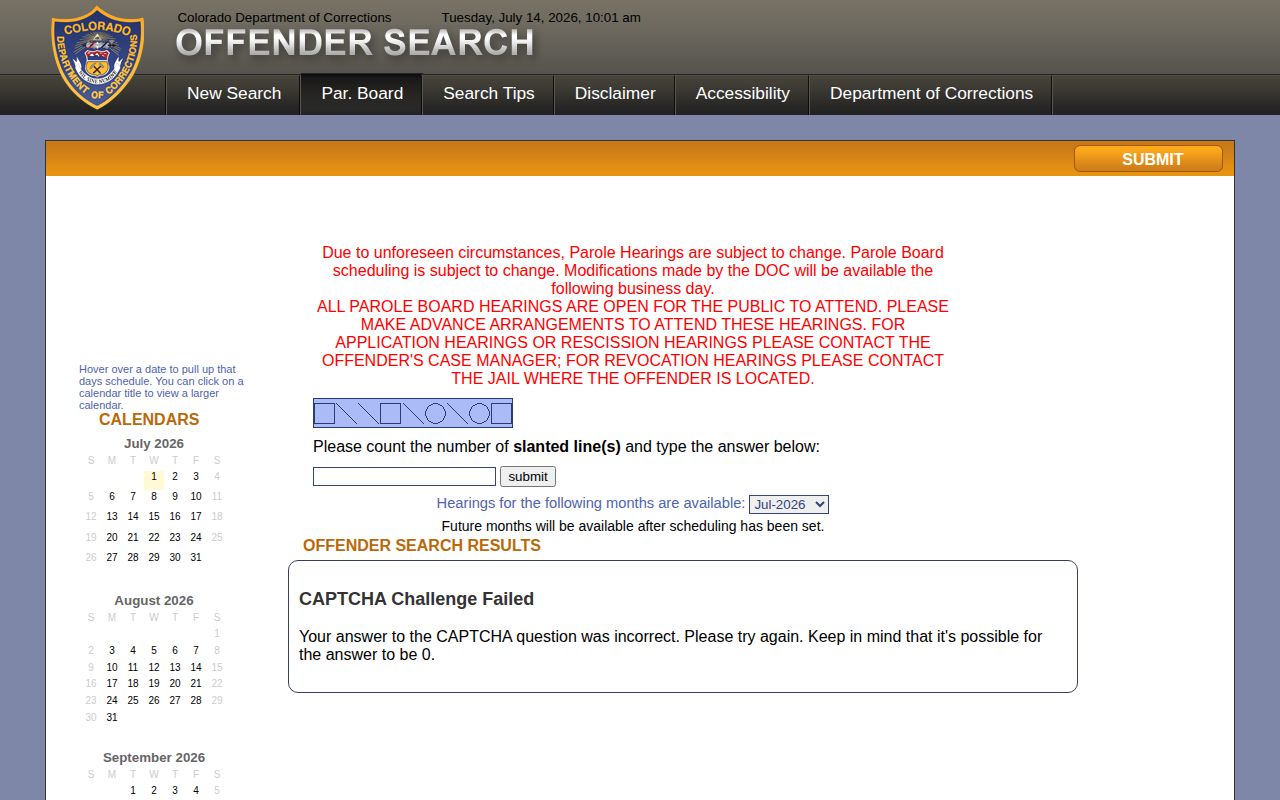
After finding a hearing, return to the offender record or request records to confirm the result. Outcomes can include release, deferment, denial, rescission, revocation, or continuation, depending on the hearing type and the record before the board.
Custer County Absconder Status
No Custer-specific public parole absconder list was found in the research. Fremont's CRIMEWATCH navigation includes warrant and most-wanted areas, but those are not the same as a statewide Custer parole absconder database. If a released person stopped reporting, verification belongs in the court warrant record, the probation file, CDOC parole status, or a current custody source if the person was arrested again.
Use careful terms. A warrant, revocation complaint, failure to appear, parole hold, or probation complaint can change custody status fast. Colorado VINE may alert to a new custody event, but the legal reason should still be matched to the Custer court docket, probation office, or CDOC record. For one named person, the best sequence is court first, supervision office second, current custody third.
Note: Do not treat lack of a VINE result as proof that a warrant or supervision case does not exist.
Property After Custer Release
Release from custody and property pickup can be separate events. Fremont publishes specific property-release steps because it is the practical detention facility for current Custer detainees. The inmate must submit an authorization form. A property deputy appointment is needed. Photo ID is required, and property will not be released to another person without written permission.
This does not prove supervision status, but it affects the days after release. A person released to probation or parole may still need to arrange property return through Fremont while also reporting to the correct supervision office. If the release came from a pre-closure Custer jail event, historic property or booking records may require a Custer public-records request instead.
Custer County Supervision Discharge
Supervision ends through a formal discharge, termination, or court order. A person may be physically released but not finished with the case. Jail release, parole release, probation discharge, and sentence completion are different milestones. The Custer County released inmates search path should name which milestone is being checked.
For probation, look for a court order, probation record, or docket event showing termination or discharge. For parole, check the CDOC record for parole or discharge status. For prison sentences, a discharge means the state sentence or supervision has ended. For jail-only sentences, the court and jail release record may show time served, but fines, restitution, useful public service, or other court obligations can still remain outside the jail release event.
When a record uses the word discharged, read the surrounding source. A jail discharge can mean release from the facility. A probation discharge can mean the court supervision term ended. A CDOC discharge can mean the state sentence or parole authority ended. Those distinctions prevent a physical release from being mistaken for full case completion.
If the docket is unclear, request the narrow order or supervision record that names the status. The best question is not just whether the person is out of jail. It is whether probation, parole, revocation, or discharge still controls the person after release.